
Abdominal wall
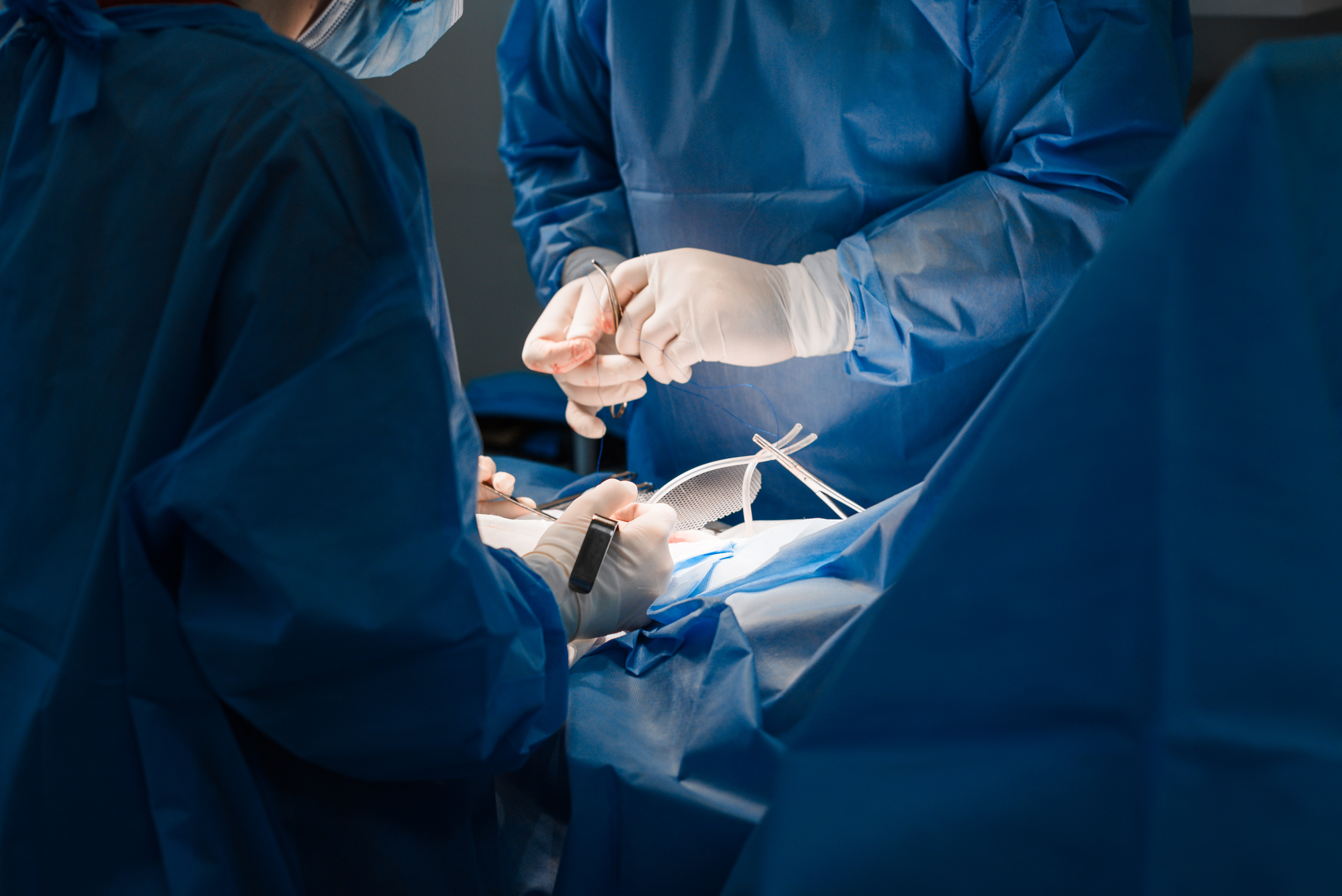
Abdominal wall surgery is the specialty dedicated to the diagnosis and treatment of hernias. At our unit, we specialise in minimally invasive approaches using laparoscopic and robotic surgery, allowing for faster recovery, less postoperative pain and reduced surgical trauma.

What is a hernia?
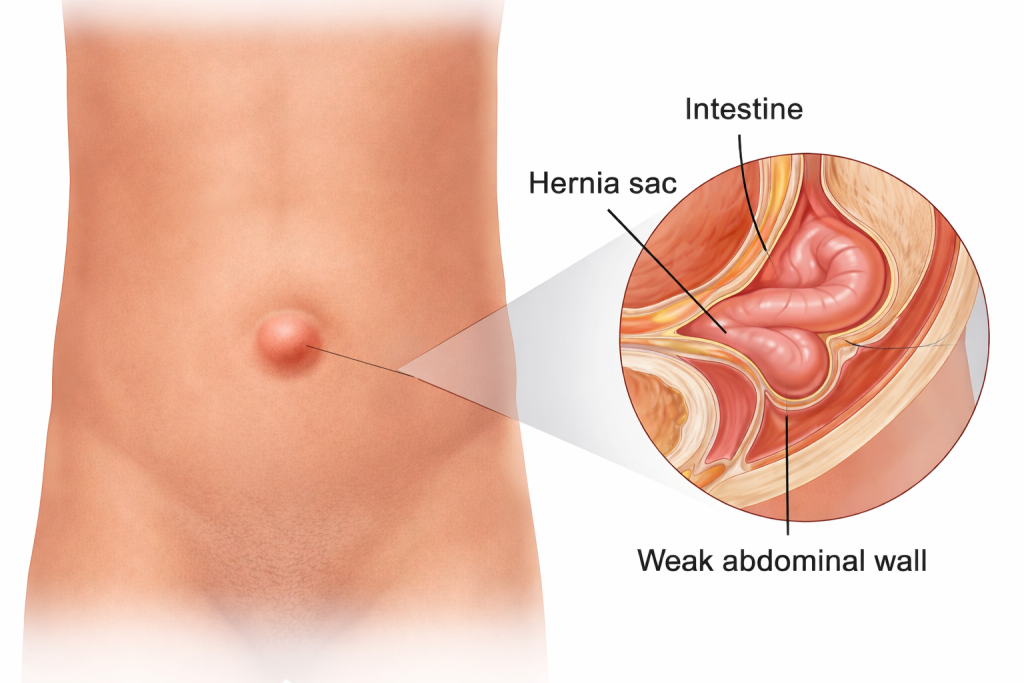
A hernia is the protrusion of abdominal contents (usually fat or intestine) through a weak point in the muscles of the abdominal wall.
It usually appears as a lump or swelling that comes and goes, particularly when coughing, straining or standing. In many cases, patients notice that it “goes in and out” or becomes larger throughout the day.
Although some hernias may cause few symptoms at first, they tend to grow over time and may lead to discomfort or complications.

Types of hernia
Inguinal hernia
This is the most common type of hernia. It occurs in the groin area and is more frequent in men.
Common symptoms:
- A lump in the groin that becomes more noticeable when straining.
- A feeling of heaviness or pressure.
- Discomfort when walking or exercising.
- Pain in more advanced cases.
In some cases, pain may radiate towards the testicle or the inner thigh.
Ventral or incisional hernia
This occurs along the midline of the abdomen or over a previous surgical scar.
Common symptoms:
- A swelling or lump around the scar.
- A feeling of abdominal weakness.
- Pain when straining.
- In large hernias, visible deformity of the abdomen.
Incisional hernias may increase in size over time and affect the function of the abdominal wall.
When does a hernia need surgery?
The definitive treatment for a hernia is surgery. Hernias do not disappear on their own and tend to increase in size over time.
Surgery is recommended when:
- It causes symptoms or pain.
- It progressively increases in size.
- It interferes with daily activities.
- There is a risk of complications, such as incarceration or strangulation.
Doctor...
FREQUENTLY ASKED QUESTIONS ABOUT ABDOMINAL WALL SURGERY
When does a hernia need surgery?
The definitive treatment for a hernia is surgery. Hernias do not disappear on their own and tend to increase in size over time.
Surgery is recommended when:
- It causes symptoms or pain.
- It progressively increases in size.
- It interferes with daily activities.
- There is a risk of complications, such as incarceration or strangulation.
What are the advantages of laparoscopic and robotic surgery?
- Small incisions.
- Less postoperative pain.
- Less inflammation.
- Faster recovery.
- Better cosmetic results.
- Earlier return to normal daily activities and work.
Robotic surgery also provides:
- Greater surgical precision.
- Improved three-dimensional vision.
- Greater control when reconstructing the abdominal wall.
- Better outcomes in complex hernias.
What is recovery like?
- What is recovery like?
- Early hospital discharge, in many cases within 24 hours.
- Early mobilisation.
- Mild to moderate pain that can be controlled with conventional pain relief.
- Gradual return to normal activities within a few days.
Our aim is to minimise surgical trauma and speed up recovery without compromising the safety or effectiveness of the treatment.
What is our commitment to our patients?
Every hernia is different. This is why we carry out an individual assessment to determine the most appropriate approach for each patient.
We use modern techniques, latest-generation surgical meshes and Enhanced Recovery After Surgery (ERAS) protocols, always aiming to provide:
- Safety.
- Precision.
- Fast recovery.
- High patient satisfaction.