Haemorrhoids
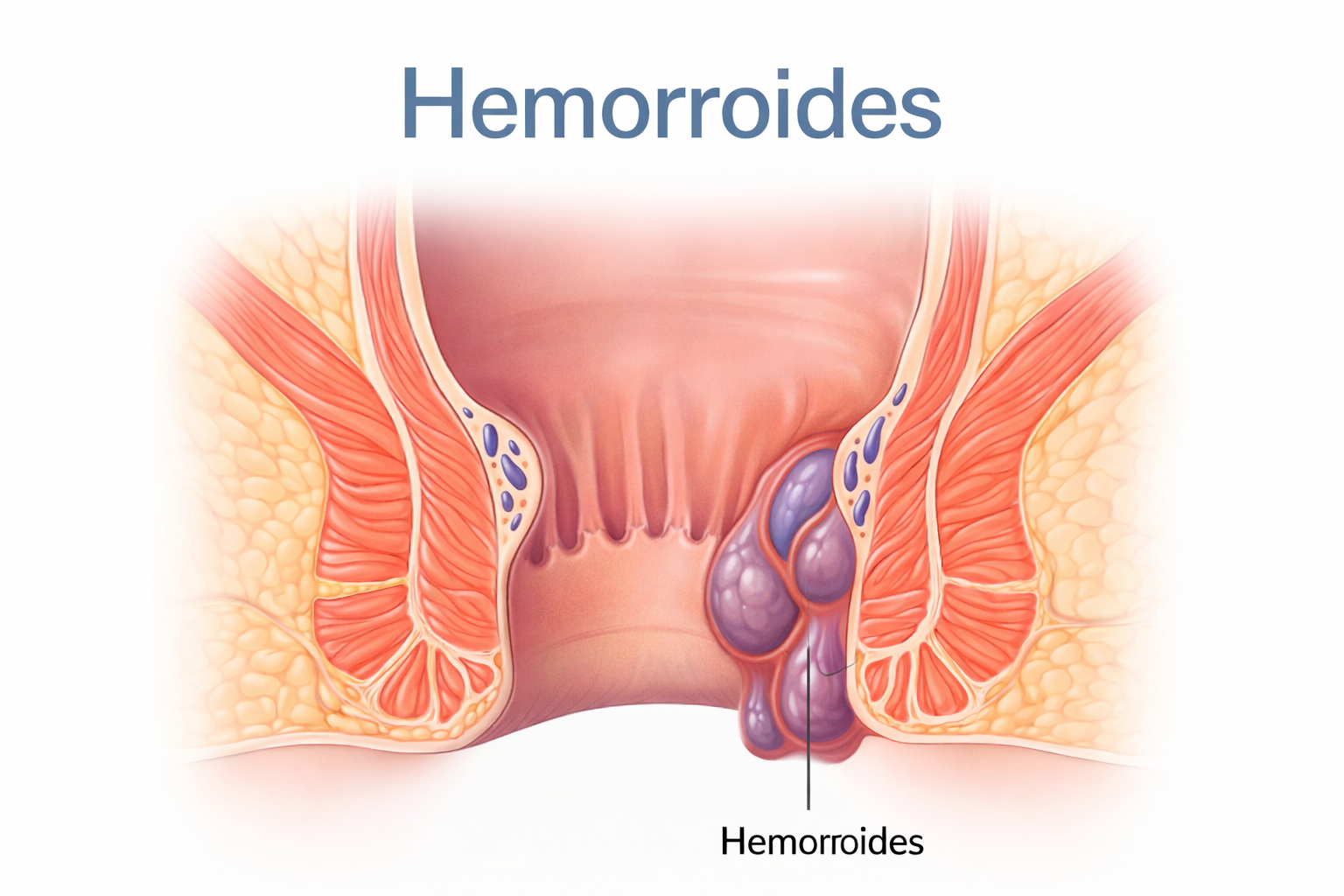
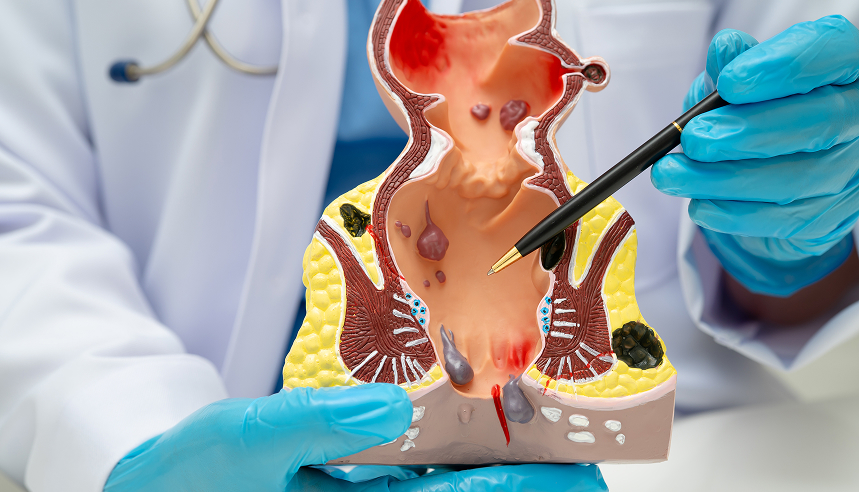
Haemorrhoids are one of the most common anal conditions. They occur when the vascular cushions naturally present in the anus prolapse or descend.
Types
Internal haemorrhoids may bleed during bowel movements and prolapse through the anus. They are classified into four grades:
- Grade I: Asymptomatic haemorrhoids.
- Grade II: Haemorrhoids that protrude through the anus during bowel movements and return inside spontaneously. They may also cause bleeding.
- Grade III: Haemorrhoids that protrude during bowel movements or spontaneously and must be pushed back inside manually.
- Grade IV: Internal haemorrhoids that protrude through the anus and remain permanently outside. They also have an external component. They differ from external haemorrhoids because the latter are covered by normal skin.
Internal haemorrhoids
Internal haemorrhoids are treated when they bleed or prolapse. Treatment involves preventing constipation, avoiding the use of toilet paper and maintaining proper hygiene.
Anti-haemorrhoidal creams are only recommended during acute haemorrhoidal flare-ups or thrombosis and should not be overused.
External haemorrhoids
External haemorrhoids are folds of skin that frequently accompany internal haemorrhoids or other conditions, such as anal fissures.
External haemorrhoids do not bleed, but they may cause a feeling of heaviness around the anus, itching and pain when they become thrombosed.
Treatments
Rubber band ligation or haemorrhoidal banding
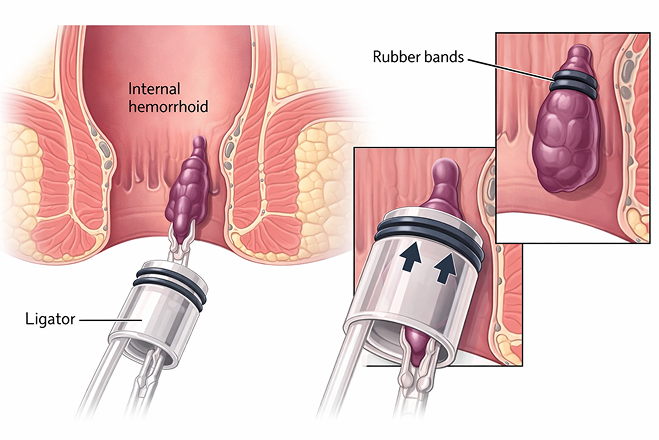
Grade II and III haemorrhoids, and occasionally Grade IV haemorrhoids, can be treated using rubber band ligation.
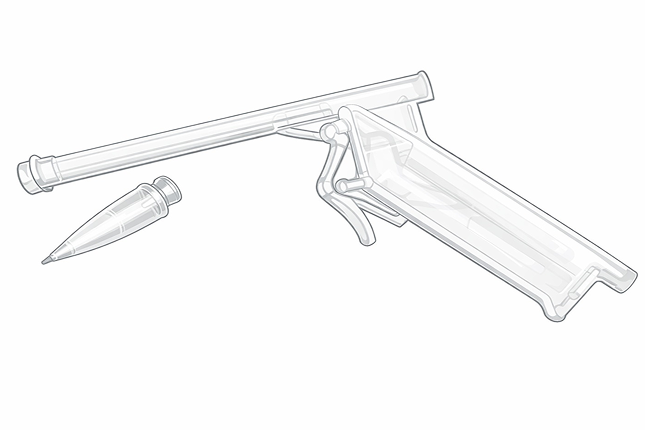
The procedure involves placing small rubber bands around one or more groups of haemorrhoidal veins, with a maximum of three bands applied per session. It is performed in an operating theatre under minimal sedation and does not cause pain. In some cases, several sessions may be required.
Procedure time:
5min
Anaesthesia:
Minimal sedation
Type of procedure:
Outpatient
LEARN MORE
Results of haemorrhoidal banding
- More than 70% of patients experience a significant improvement after treatment.
- Clear improvement in quality of life: bleeding stops and the sensation of a lump or pressure is reduced.
- Mild to moderate pain: most patients rate it between 2 and 4 out of 10, lasting only a few days.
What is the recovery like?
- A quick procedure that does not require open surgery.
- Most patients return to their normal routine within 24–48 hours.
- A safe, effective and minimally invasive technique that avoids a lengthy recovery.
600-micron laser haemorrhoidectomy
Conventional surgery is recommended for Grade III haemorrhoids that do not respond to medical treatment or rubber band ligation, as well as for Grade IV haemorrhoids.
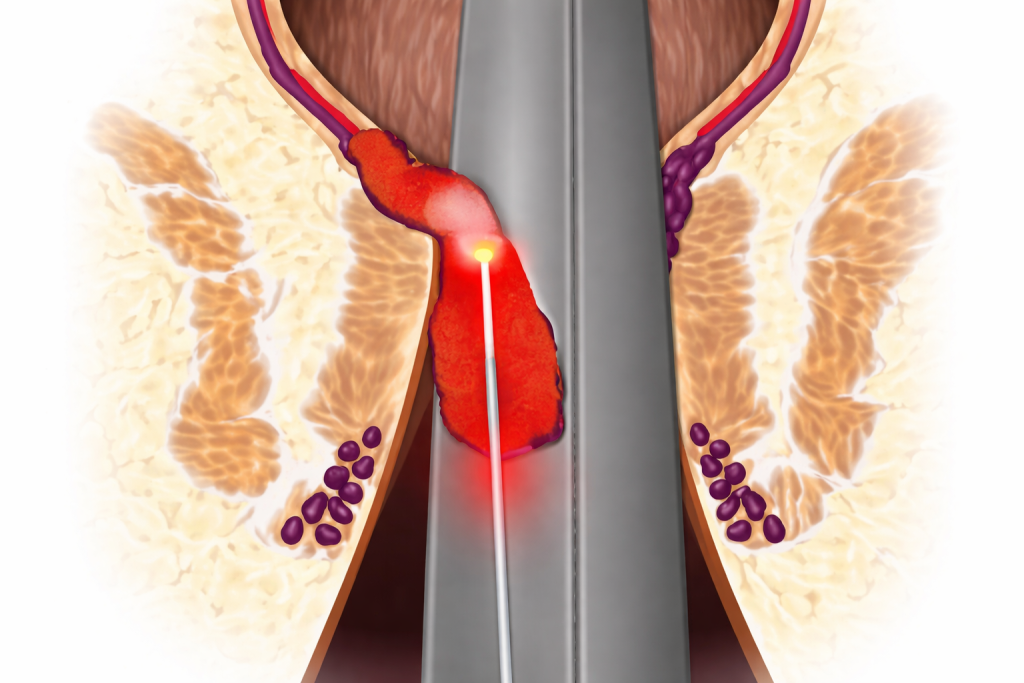
Different surgical techniques are available. The most commonly used technique, which has demonstrated the best results, is the 600-micron laser-guided Milligan–Morgan haemorrhoidectomy. It involves removing the haemorrhoids and leaving the wounds open to heal by secondary intention.
Procedure time:
20min
Anaesthesia:
Local anaesthesia and sedation
Type of procedure:
Outpatient
LEARN MORE
Results of laser haemorrhoidectomy
- Permanent resolution of the condition in more than 90–95% of cases.
- A very high level of patient satisfaction.
- Significantly less pain than with conventional haemorrhoidectomy: most patients report mild to moderate pain, rated between 5 and 6 out of 10.
What is the recovery like?
- A quick and progressive recovery, with a return to normal activities within 1–2 weeks.
- Less need for pain medication due to the precision of the laser and reduced inflammation.
- A more comfortable and controlled recovery than with conventional haemorrhoidectomy.
Microfoam
This method does not require the patient to undergo surgery. It is an outpatient treatment that allows patients to resume their normal routine on the same day.
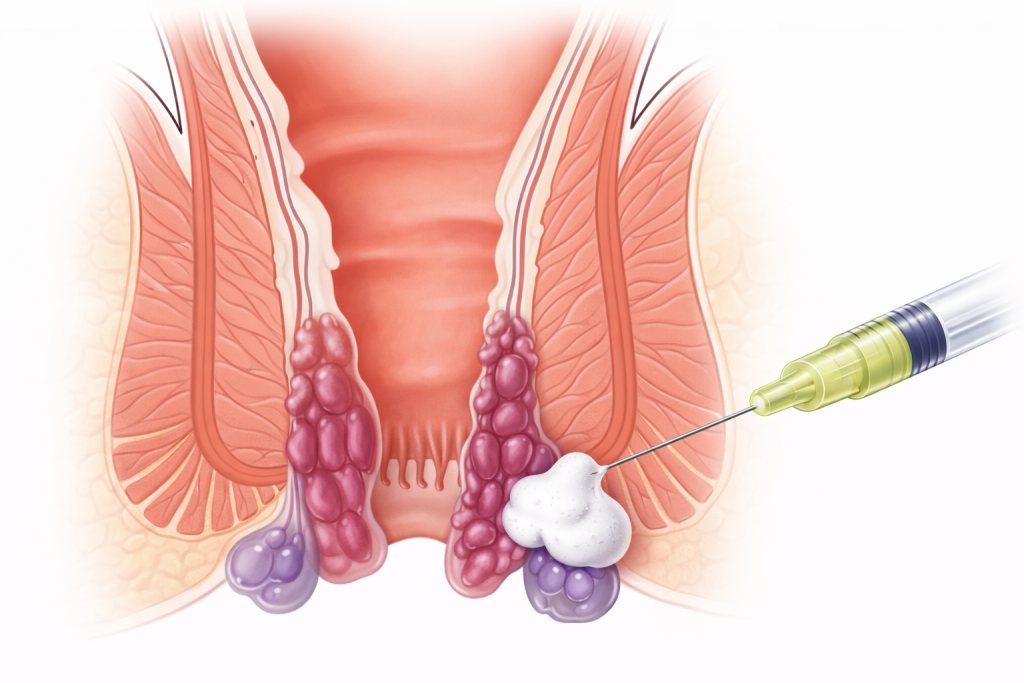
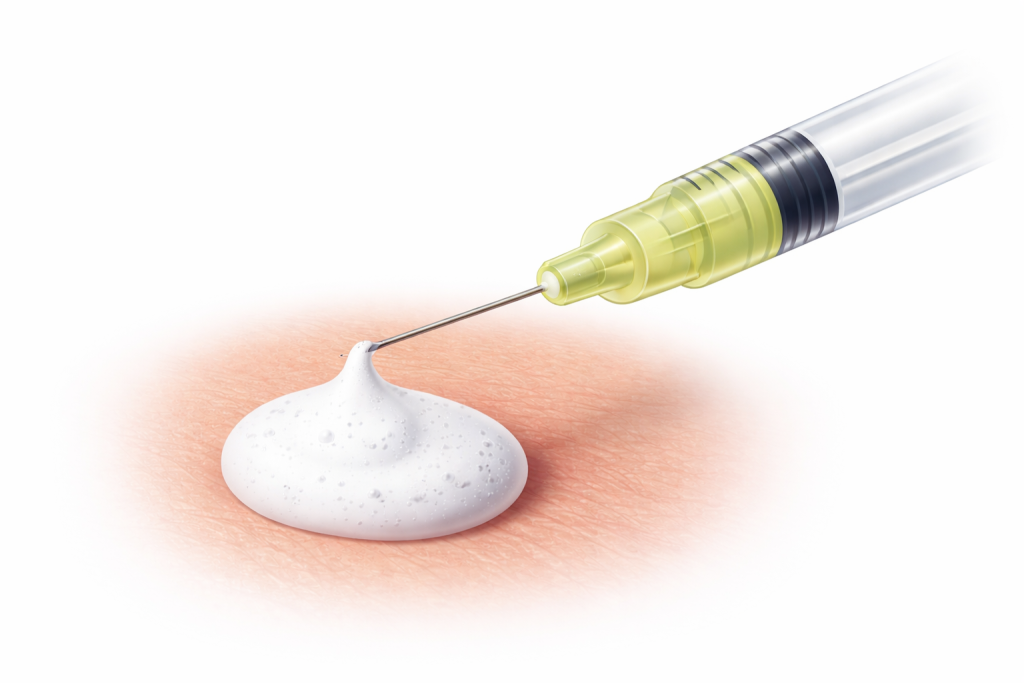
The procedure involves injecting an innovative microsphere-based compound into the haemorrhoid. This causes the haemorrhoidal vein to close, reducing inflammation and pain within approximately two weeks.
The patient can leave the clinic independently on the same day. The microfoam begins to take effect immediately, with the full therapeutic effect developing over the following three weeks.

Procedure time:
5min
Anaesthesia:
Local anaesthesia and sedation
Type of procedure:
Outpatient
LEARN MORE
Results of microfoam treatment
- Between 60% and 70% of patients experience an improvement , particularly in bleeding and mild to moderate discomfort.
- Symptoms improve quickly: with bleeding and inflammation decreasing within a few days.
- Minimal or virtually no pain: most patients rate it between 1 and 2 out of 10.
What is the recovery like?
- An outpatient procedure that takes only a few minutes.
- Patients can resume their normal routine immediately, with no need to take time off work in most cases.
- A very minimally invasive technique with no incisions or wounds, making it ideal during the early stages or as a complement to other treatments.
LHP
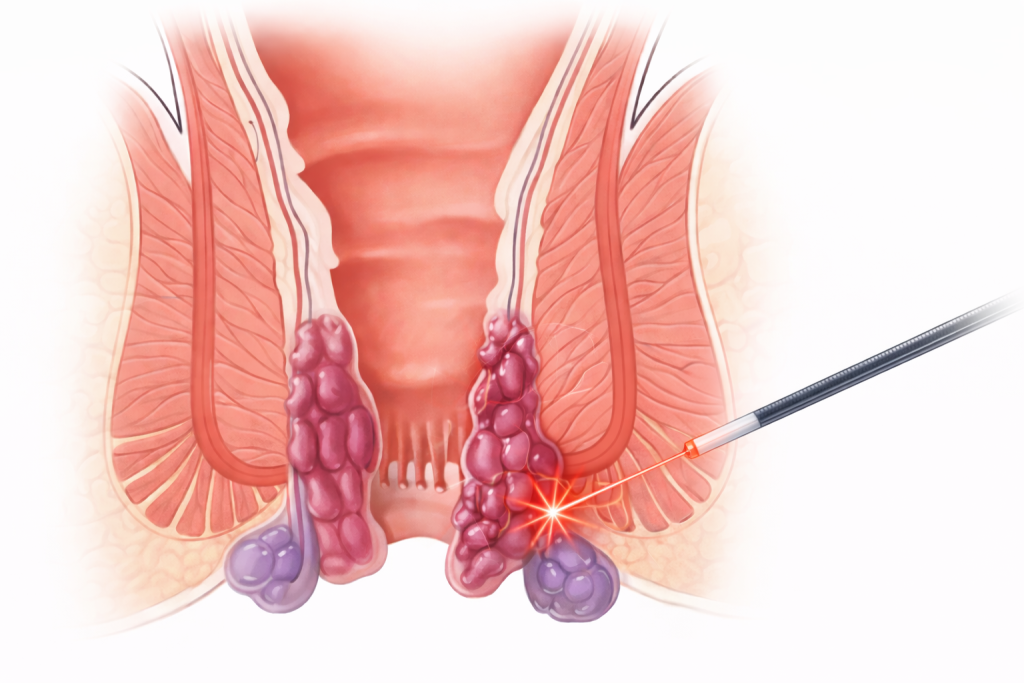
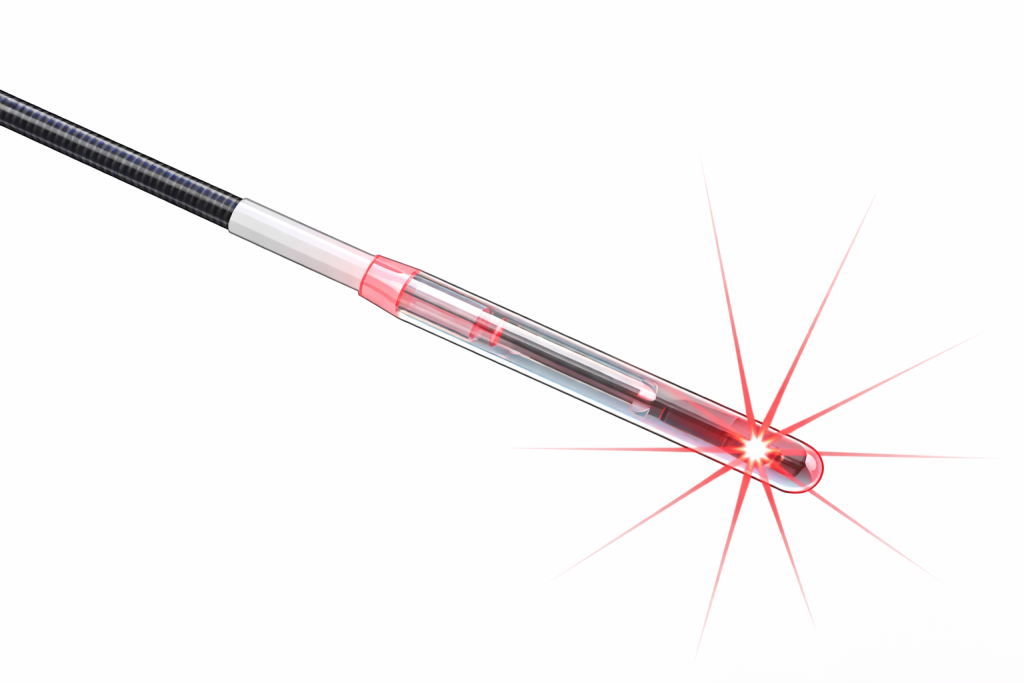
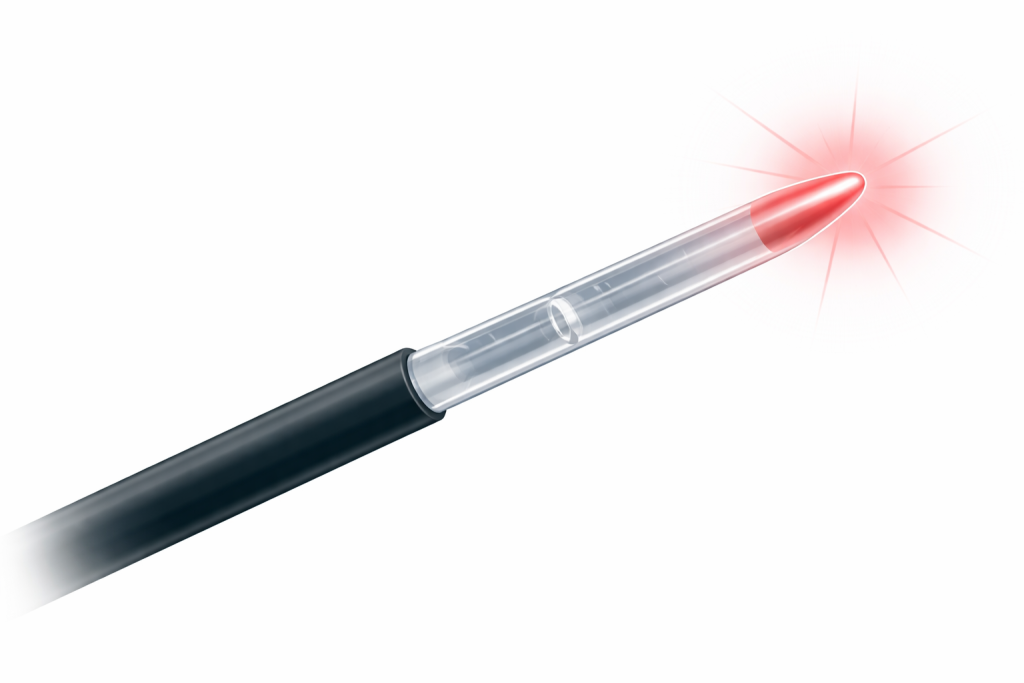
The procedure involves applying laser energy directly inside the haemorrhoid. The laser causes controlled shrinkage of the haemorrhoidal tissue, reducing its size and inflammation while progressively relieving pain and bleeding over the following weeks.
The patient is discharged on the same day and can leave the clinic independently. The laser continues to take effect over the following weeks until the final improvement is achieved.
Procedure time:
20min
Anaesthesia:
Local anaesthesia and sedation
Type of procedure:
Outpatient
LEARN MORE
Results of LHP
- More than 75% of patients experience a significant improvement.
- The procedure preserves the anatomy and the sphincter, with an extremely low risk of incontinence.
- Very mild pain: most patients rate it between 1 and 3 out of 10.
What is the recovery like?
- A minimally invasive laser technique with no large external wounds.
- Patients can usually return to their normal routine within a few days.
- Less inflammation, pain and bleeding than with more aggressive techniques.
THD
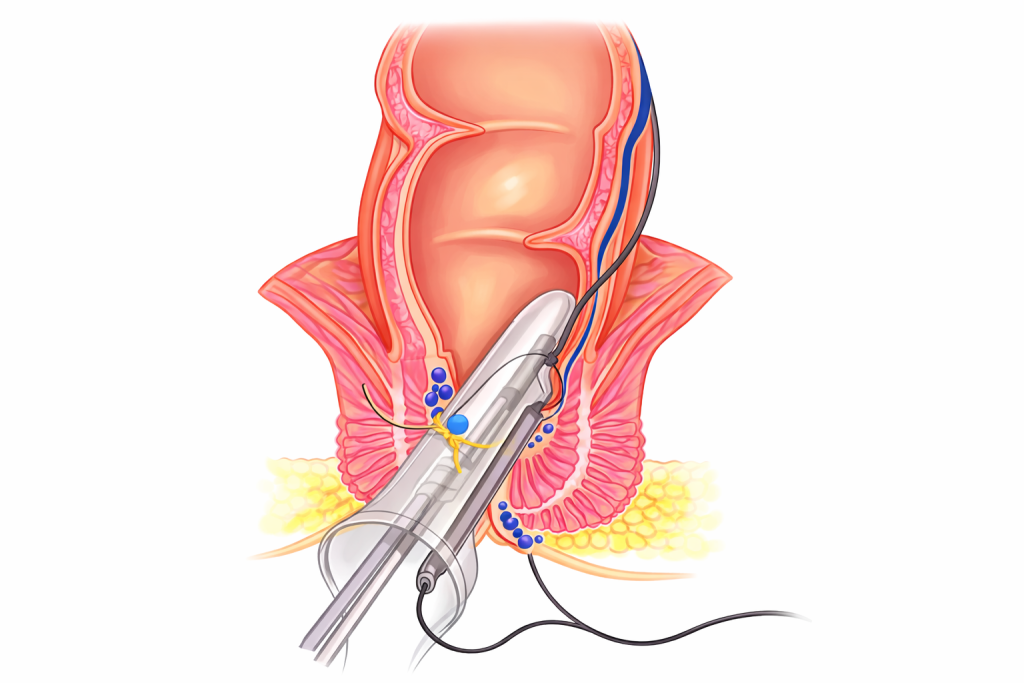
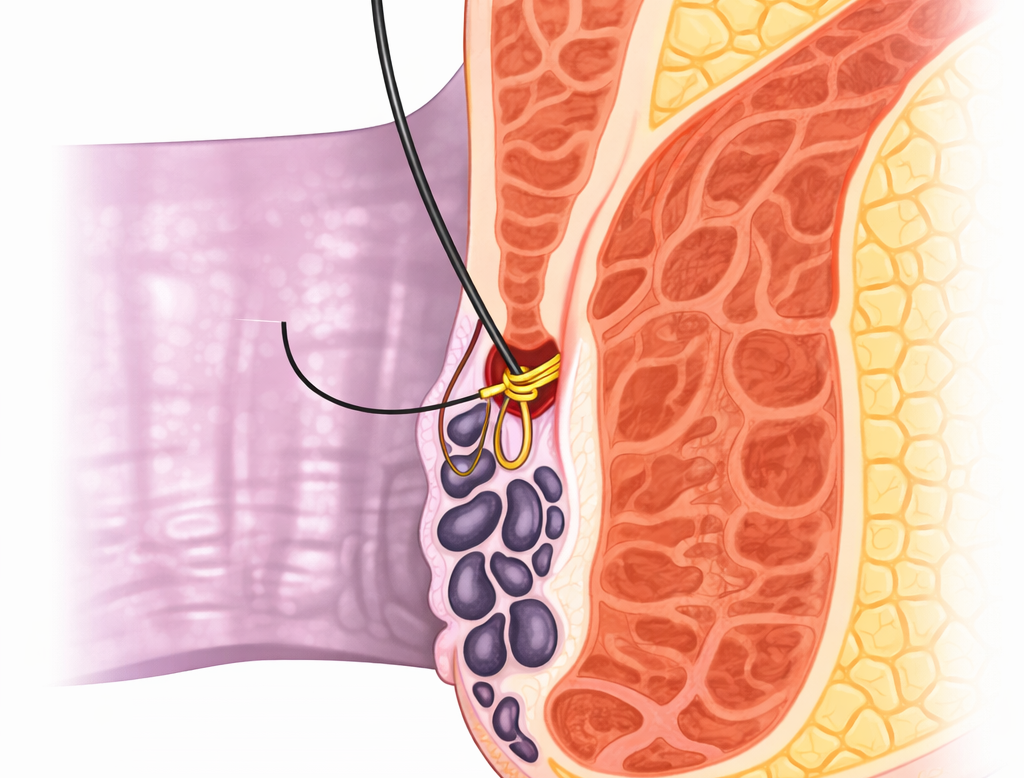
THD uses Doppler ultrasound to locate the branches of the haemorrhoidal arteries that supply blood to the haemorrhoids.
Once they have been identified, a haemorrhoidopexy is performed to lift the haemorrhoids and prevent them from protruding through the anus. The haemorrhoidal arteries are then ligated to reduce the blood supply to the haemorrhoids.
This technique can be performed as day-case surgery, and the recovery is considerably more comfortable than after conventional surgery.
Procedure time:
20min
Anaesthesia:
Local anaesthesia and sedation
Type of procedure:
Outpatient
LEARN MORE
Results of THD
- More than 80% of patients experience a significant and long-lasting improvement.
- Considerable improvement in quality of life: bleeding stops and the prolapse of internal haemorrhoids is reduced.
- Low postoperative pain, usually rated between 4 and 5 out of 10.
What is the recovery like?
- A minimally invasive technique with no external wounds or visible incisions.
- A quick recovery, with patients returning to their normal activities within 7–10 days.
- Less pain and a lower risk of incontinence than with other techniques.
Doctor...
FREQUENTLY ASKED QUESTIONS ABOUT HAEMORRHOIDS
What is recovery usually like after haemorrhoid surgery?
With laser surgery, the recovery period is usually shorter than with traditional techniques. Patients generally experience less pain and bleeding and can return to their daily activities sooner.
What exactly are haemorrhoids and what symptoms do they cause?
Internal haemorrhoids usually cause bleeding. External haemorrhoids are more likely to cause a sensation of a lump or fold of skin around the anus and may become painful if inflamed.
What types of treatments or surgery are available for haemorrhoids?
Treatment should always be tailored to each individual case. The most common techniques include 600-micron laser haemorrhoidectomy, rubber band ligation, LHP laser treatment, microfoam, THD or conventional Milligan–Morgan haemorrhoidectomy.
When should I see a specialist about haemorrhoids?
You should seek medical advice if you experience frequent bleeding, persistent pain, an increase in the size of the lump or symptoms that interfere with your daily life. An early assessment can help prevent complications.